Biosecurity in animal production and veterinary medicine – From principles to practice

Biosecurity in animal production and veterinary medicine – From principles to practice

  • Author: Dewulf J.
  • Co-authors: Van Immerseel F. (Ghent University), Van Meirhaeghe H. (Vetworks), De Gussem M. (Vetworks)
  • Year of publication: 2018

Link to publication


Globally, the way the animal production industry copes with infectious diseases is changing. The (excessive) use of antimicrobials is under debate and it is becoming standard practice to implement thorough biosecurity plans on farms to prevent the entry and spread of pathogenic micro-organisms.

Not only in farm animal production but also in facilities where companion animals are kept, including in veterinary practices and clinics, awareness of the beneficial implications of a good biosecurity plan has raised.

The book Biosecurity in Animal Production and Veterinary Practices is the first compilation of both fundamental aspects of biosecurity practices and specific and practical information on the application of the biosecurity measures in different animal production and animal housing settings.
Poultry Health Tool

Poultry Health Tool

  • Author(s): Giambrone J.J.
  • Co-author(s): De Gussem M.
  • Published in: poultryworld.net
  • Year of publication: 2015

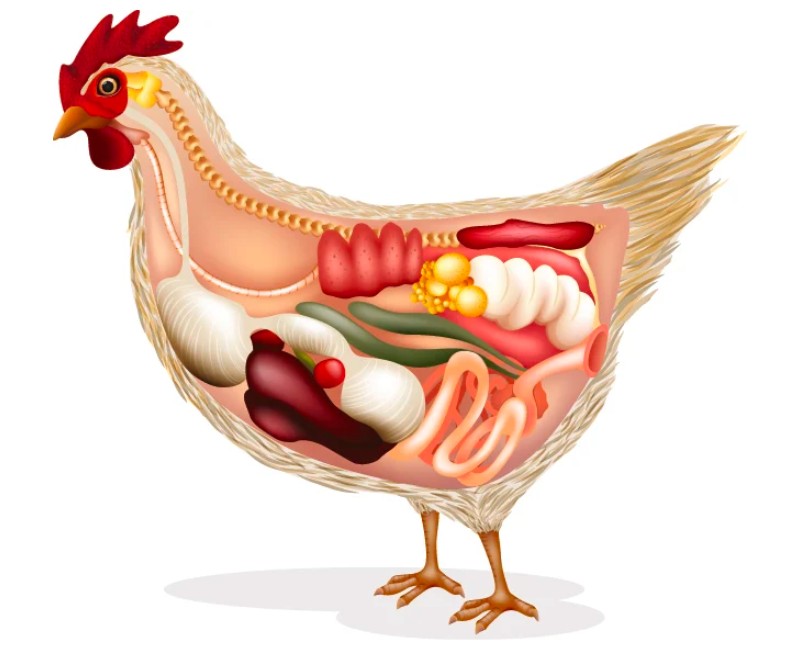
Poultry World launched a poultry health tool together with renowned veterinary experts Prof. Joseph Giambrone from Auburn University and practitioner Maarten De Gussem from Vetworks.

The tool is a helpful introductory entry to main poultry health issues and it lists 66 diseases, organized in four categories: Skin and skeleton, Nervous system, Digestive system and Respiratory system.

Visit the poultry health tool.

Eyes on poultry health series

Eyes on poultry health series

  • Author(s): De Gussem M.
  • Published in: poultryworld.net

Together with World Poultry, Vetworks assisted in the creation of poultry health videos with the theme Eyes on Health:

These videos include important aspects of broiler management among which:

1. Eyes on health 1: In the broiler house
2. Eyes on health 2: On broiler level
3. Eyes on health 3: Taking swabs for disease detection
4. Eyes on health 4: Necropsy
5. Eyes on health 5: Digestive tract

Link to publication

Morphometric evaluation of “dysbacteriosis” in broilers

Morphometric evaluation of “dysbacteriosis” in broilers

  • Author(s): Teirlynck E.
  • Co-author(s): De Gussem M., J. Dewulf, F. Haesebrouck, R. Ducatelle & F. Van Immerseel
  • Published in: Avian Pathology Journal – Volume 40, 2011 – Issue 2
  • Year of publication: 2011

Link to publication


In consequence of the withdrawal of products that assisted animal production, such as antimicrobial growth promoters, once-controlled enteric diseases have returned and new multifactorial diseases causing gut disorders of unknown origin have emerged in broilers.

One of these widespread syndromes causing intestinal health problems in broilers is in the field referred to as “dysbacteriosis”.

During the present study, the histopathology of the intestinal tract of broilers affected with dysbacteriosis was analysed.

Commercial broilers were given a macroscopic dysbacteriosis score by experienced veterinarians during necropsy.

Samples from the duodenum and caecum were taken from each broiler for histopathological analysis.

An increase in the macroscopic dysbacteriosis score coincided with increased villus atrophy, a decrease in the thickness of the tunica muscularis and an increase in T-lymphocyte infiltration in the gut mucosa.

Also more and larger goblet cells were observed in the animals with high macroscopic dysbacteriosis scores.

Although the exact aetiology still remains to be identified, dysbacteriosis in broiler chickens thus coincides with an inflammatory reaction in the gut mucosa.

Development and use of Biocheck.UGent™ scoring system to quantify biosecurity in conventional indoor (turkey, duck, breeder) and free-range (layer and broiler) poultry farms

Development and use of Biocheck.UGent™ scoring system to quantify biosecurity in conventional indoor (turkey, duck, breeder) and free-range (layer and broiler) poultry farms

  • Author(s): Arthi Amalraj, Hilde Van Meirhaeghe, Nele Caekebeke, Rhea Creve , Anne-Christine Dufay-Lefort, Nathalie Rousset, Annick Spaans, Aitor Devesa, Giuditta Tilli, Alessandra Piccirillo, Artur Żbikowski, László Kovács, Ilias Chantziaras, Jeroen Dewulf
  • Published in: Preventive Veterinary Medicine
  • Year of publication: 2024

Link to publication


To assess and enhance the application of biosecurity measures in poultry farming, an objective measurement tool (Biocheck.UGent™) was already available for broiler and layer. This study describes the development, validation and application of a risk-based weighted scoring tool for breeder, turkey, duck, free-range layer and free-range broiler production. In collaboration with an expert panel (n= 38), five different questionnaires were developed, following the format of the existing Biocheck.UGent scoring tools. Weights were attributed to external (7–9 subcategories) and internal (3–4 subcategories) biosecurity categories, as well as to the corresponding individual questions within each subcategory. The biosecurity measures were prioritized and weighed based on their relative importance in preventing disease transmission. Upon completion of the questionnaire, and upload of all answers to the Biocheck.UGent website, the algorithm generates a biosecurity score varying between ‘’0’’ which equals the total absence of any biosecurity measure up to ‘’100’’ which refers to full application of all biosecurity measures. The final scoring systems are available online (https://biocheckgent.com/en) for free and have been used to assess biosecurity in 70 breeders, 100 turkeys, 23 ducks, 16 free-range broilers, and 15 free-range layer farms originating from 12 countries so far. On average, the overall biosecurity score (mean ± std. dev) was 78 ± 7 % for breeders, 73 ± 11 % for turkeys, 71 ± 8 % for ducks, 73 ± 8 % for free-range layers and 70 ± 13 % for free-range broilers. There were significant differences (p < 0.05) in biosecurity (both at the overall and subcategory levels) across different poultry types. The overall farm biosecurity score for breeders was significantly higher than that for turkey (p <.001) and duck production (p = 0.001). External biosecurity levels were highest in breeders in comparison to turkeys (p < 0.001), ducks (p = 0.008) and broiler free-range (p = 0.005). There was a notable difference in internal biosecurity levels between duck and turkey (p = 0.041) production as well. The study contributed to the poultry biosecurity database which allows benchmarking of the biosecurity levels of the users’ farm results to national or international averages, indicating room for improvement and aiding to motivate stakeholders to enhance their biosecurity levels.