Vetworks is organizing sponsor of the 4th Avian Mycoplasma Conference

Will you join us for the 4th International Avian Mycoplasma Conference 2026?

The 4th International Avian Mycoplasma Conference will take place in Campinas, São Paulo, Brazil, from 13–15 October 2026, bringing together leading experts, researchers, veterinarians, and industry professionals from around the world to discuss the latest developments in poultry mycoplasma.

Organized with the support of Vetworks, the conference will cover key topics including mycoplasma microbiology and immunology, pathogenesis, diagnostics, vaccination strategies, antimicrobial resistance, biosecurity, and the economic impact of Mycoplasma gallisepticum (MG) and Mycoplasma synoviae (MS).

The programme features international experts including Chris Morrow (Bioproperties), Alberto Back (Mercolab), and Maarten De Gussem (Vetworks), alongside additional speakers to be announced.

We look forward to welcoming the global poultry health community to Campinas for three days of scientific exchange, practical insights, and discussion on the future of avian mycoplasma control.

For more info about the conference, click here!

Is biosecurity a driver for improved poultry performance? Experiences from a field trial

Is biosecurity a driver for improved poultry performance? Experiences from a field trial

  • Author(s): Giuditta Tilli1, Hilde Van Meirhaeghe1, Hedia Nasri Smaili2, Ana Mansilla2, Giulia Graziosi3, Tiago Prucha1, Maarten De Gussem1,4

    1Vetworks bv, Knokstraat 38, B-9880 Poeke, Belgium – giuditta.tilli@vetworks.eu; maarten.degussem@vetworks.eu)

    2CID lines, an Ecolab Company, Waterpoortstraat 2, 8900 Ieper, Belgium
    3Department of Veterinary Medical Sciences, University of Bologna, Via Tolara di Sopra, 50, 40064 Ozzano dell’Emilia (BO), Italy
    4Faculty of Veterinary medicine, Ghent University, Salisburylaan 133, 9820, Merelbeke, Belgium

  • Published in: Zootecnica Poultry Magazine
  • Year of publication: 2026

Maintaining strict biosecurity is vital in poultry farming, with cleaning and disinfection (C&D) serving as a cornerstone for flock health and performance. On-field evidences show that well-implemented C&D can generate a return on investment and improve the performance of the flock even when infection pressure is low.

Link to publication

Overview of worm infestations in chickens: integrated control, preventive strategies, and novel diagnostic tools

Overview of worm infestations in chickens: integrated control, preventive strategies, and novel diagnostic tools

  • Author(s):

    Hilde Van Meirhaeghe1,2, Swati Karki1,3, Giuditta Tilli1, Maarten De Gussem1,2
    1 Vetworks bvba, Knokstraat 38, Poeke B-9880, Belgium (hilde.vanmeirhaeghe@vetworks.eu; giuditta.tilli@vetworks.eu; maarten.degussem@vetworks.eu)
    2 Faculty of Veterinary Medicine, University of Ghent, Salisburylaan 133, 9820 Merelbeke, Belgium
    3 Poulpharm bvba, Prins Albertlaan 112, 8870 Izegem, Belgium

  • Published in: Zootecnica Poultry Magazine

  • Year of publication: 2026

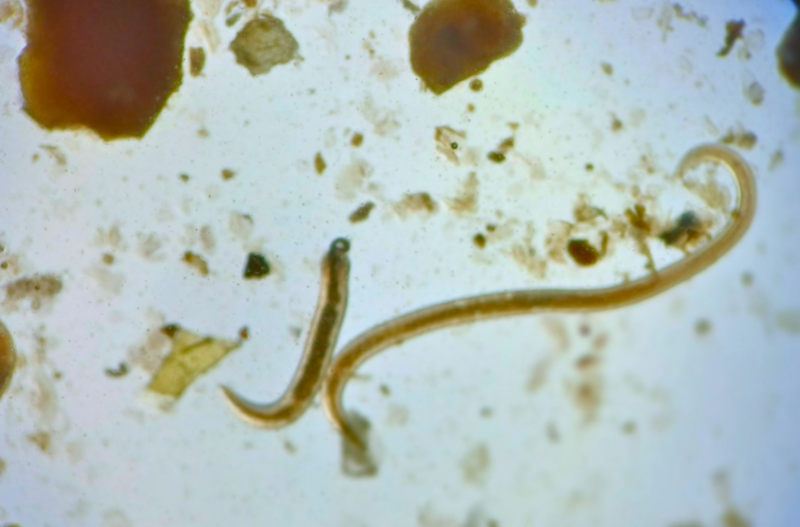
The transition toward alternative and free-range housing systems has led to a renewed increase in helminth infection pressure in poultry production. Intestinal worms not only cause direct gastrointestinal damage but also impair immune competence and productivity, emphasizing the need for accurate diagnosis, monitoring, and flock-specific control strategies. Integrated prevention, evidence-based deworming programs, and continued research into novel diagnostic and control approaches are essential for sustainable helminth management in modern poultry systems.

Link to publication

Bioavailable silicium as feed additive and its beneficial effects throughout poultry production

Bioavailable silicium as feed additive and its beneficial effects throughout poultry production

Silicium is a naturally occurring trace element that supports bone formation, collagen synthesis, and structural integrity in tissues and eggshell membranes. In poultry, dietary bioavailable silicium can improve skeletal strength, egg and eggshell quality, laying performance, and hatchability, making it a valuable additive across production systems.

Click here and read more on benefits of Bioactive Silicium in poultry!

On-farm hatching: an innovative early-feeding strategy that improves welfare and reduces antimicrobial use in a sustainable way

On-farm hatching: an innovative early-feeding strategy that improves welfare and reduces antimicrobial use in a sustainable way

  • Author(s):

    Hilde Van Meirhaeghe1,2, Giuditta Tilli1, Maarten De Gussem1,2
    1 Vetworks bvba, Knokstraat 38, Poeke B-9880, Belgium, 2 Faculty of Veterinary Medicine, University of Ghent, Salisburylaan 133, 9820, Merelbeke, Belgium

  • Published in: Zootecnica Poultry Magazine
  • Year of publication: 2026

On-farm hatching is an innovative hatching technique that provides early feeding post hatch to newborn chicks. Several experimental studies and field trials show that flocks hatched on-farm have better intestinal health and health in general, resulting in fewer antibiotic treatments and better welfare.

Link to publication

ICPIH 2026 concludes in Istanbul with record attendance

ICPIH 2026 concludes in istanbul with record attendance

 As organizing sponsors, we are proud to share that the 9th Edition of the International Conference on Poultry Intestinal Health was a record-breaking success, welcoming over 1,000 participants to Istanbul.

The program featured 6 sessions, 7 invited speakers, 59 short communications, 20 pitch sessions, and 105 poster presentations – creating a dynamic environment for knowledge sharing, networking, and collaboration.

Looking ahead, the 10th jubilee edition will take place in Panama, promising to build on this momentum and further connect the global poultry health community.

Feed Additive Magazine featured a comprehensive cover story on the event – check the full article for highlights, insights, and key industry takeaways on the link below!

Public PhD Defense – Advancing Welfare Monitoring in Broiler Chickens

Public PhD Defense – Advancing Welfare Monitoring in Broiler Chickens

We are pleased to invite you to the public PhD defense of Patricia Soster de Carvalho, presenting her research on innovative welfare monitoring approaches in broiler chickens. This work combines sound analysis, computer vision, and physiological biomarkers to advance precision livestock farming and improve animal welfare assessment.

Her research, conducted in collaboration with Poulpharm, provides new insights into automated monitoring technologies and their potential to support the poultry industry.


📅 Date: 4 May 2026
📍 Location: Ghent University, Faculty of Veterinary Medicine

 

If you wish to attend the defense and the reception, please register before 30 April via patricia.sosterdecarvalho@ugent.be 

Join online or register to attend

Full Invitation and thesis summary

Vetworks is Organizing Sponsor for 9th International Conference on Poultry Intestinal Health in Istanbul, 2026

Mark your calendars for the 9th International conference on poultry intestinal health: 22-24 April 2026

This globally recognized event continues to serve as a premier platform for scientists, veterinarians, industry leaders, and researchers to share the latest advances and insights into poultry gut health, microbiome research, disease control, and sustainable production strategies.

Vetworks is proud to be the organizing sponsor of the 2026 edition in the historic city of Istanbul, Turkey.

With its deep expertise in poultry health and strong presence in the global veterinary community, Vetworks will play a key role in shaping both the program and the impact of the conference.

Join us in Istanbul as we lead the discussion on poultry intestinal health. Together, we will shape the future of this vital field.

For more information and updates, visit www.icpih.com

Morphometric evaluation of “dysbacteriosis” in broilers

Morphometric evaluation of “dysbacteriosis” in broilers

  • Author(s): E. Teirlynck, M. D. E. Gussem, J. Dewulf, F. Haesebrouck, R. Ducatelle & F. Van Immerseel
  • Published in: Avian Pathology Volume 40, 2011 – Issue 2
  • Year of publication: 2011

Link to publication

In consequence of the withdrawal of products that assisted animal production, such as antimicrobial growth promoters, once-controlled enteric diseases have returned and new multifactorial diseases causing gut disorders of unknown origin have emerged in broilers.


One of these widespread syndromes causing intestinal health problems in broilers is in the field referred to as “dysbacteriosis”. During the present study, the histopathology of the intestinal tract of broilers affected with dysbacteriosis was analysed. Commercial broilers were given a macroscopic dysbacteriosis score by experienced veterinarians during necropsy. Samples from the duodenum and caecum were taken from each broiler for histopathological analysis.

An increase in the macroscopic dysbacteriosis score coincided with increased villus atrophy, a decrease in the thickness of the tunica muscularis and an increase in T-lymphocyte infiltration in the gut mucosa. Also more and larger goblet cells were observed in the animals with high macroscopic dysbacteriosis scores.

Although the exact aetiology still remains to be identified, dysbacteriosis in broiler chickens thus coincides with an inflammatory reaction in the gut mucosa.

Factors Affecting Poultry Producers’ Attitudes towards Biosecurity


Factors Affecting Poultry Producers’ Attitudes towards Biosecurity

  • Author(s): Arthi Amalraj, Hilde Van Meirhaeghe, Anne-Christine Lefort, Nathalie Rousset, Justine Grillet, Annick Spaans, Aitor Devesa, Sandra Sevilla-Navarro, Giuditta Tilli, Alessandra Piccirillo, Artur Żbikowski, László Kovács, Mária Kovács-Weber, Ilias Chantziaras and Jeroen Dewulf
  • Published in: MDPI – Animals
  • Year of publication: 2024

Link to publication


The prevention of the spread of poultry diseases within and among farms largely depends on the adoption of good biosecurity practices.

Through the process of profiling European poultry producers, we were able to identify the particular aspects that influence the adoption of biosecurity practices. The results suggest a wide and varied attitude towards biosecurity in the poultry farming community. Generally, most producers appear to be aware of the risks associated with poor biosecurity and the outcomes of carrying out or not carrying out certain practices. Yet, compared with producers of laying hens or parent breeding stock, meat poultry producers (broiler, turkeys, and ducks) appear to have more blocking components with regard to biosecurity.

The education level had a positive effect on perception about biosecurity. Poultry producers are not a homogeneous group, and to change their attitudes and actions, approaches must consider the producers’ mindset and need to be tailored to the specific needs of the producers.