Factors Affecting Poultry Producers’ Attitudes towards Biosecurity


Factors Affecting Poultry Producers’ Attitudes towards Biosecurity

  • Author(s): Arthi Amalraj, Hilde Van Meirhaeghe, Anne-Christine Lefort, Nathalie Rousset, Justine Grillet, Annick Spaans, Aitor Devesa, Sandra Sevilla-Navarro, Giuditta Tilli, Alessandra Piccirillo, Artur Żbikowski, László Kovács, Mária Kovács-Weber, Ilias Chantziaras and Jeroen Dewulf
  • Published in: MDPI – Animals
  • Year of publication: 2024

Link to publication


The prevention of the spread of poultry diseases within and among farms largely depends on the adoption of good biosecurity practices.

Through the process of profiling European poultry producers, we were able to identify the particular aspects that influence the adoption of biosecurity practices. The results suggest a wide and varied attitude towards biosecurity in the poultry farming community. Generally, most producers appear to be aware of the risks associated with poor biosecurity and the outcomes of carrying out or not carrying out certain practices. Yet, compared with producers of laying hens or parent breeding stock, meat poultry producers (broiler, turkeys, and ducks) appear to have more blocking components with regard to biosecurity.

The education level had a positive effect on perception about biosecurity. Poultry producers are not a homogeneous group, and to change their attitudes and actions, approaches must consider the producers’ mindset and need to be tailored to the specific needs of the producers.
Autovaccins, l’alternative aux antibiotiques qui a la cote

Autovaccins, l’alternative aux antibiotiques qui a la cote

  • Author(s): Hilde Van Meirhaeghe
  • Published in: Filières Avicole
  • Year of publication: 2021

Link to publication


Parmi les solutions alternatives aux antibiotiques, les autovaccins rencontrent de plus en plus de succès.

Hilde Van Meirhaeghe, consultante vétérinaire pour Vetworks revient sur les avantages de cette solution.

Coccidiosis in poultry: Review on diagnosis, control, prevention and interaction with overall gut health

Coccidiosis in poultry: Review on diagnosis, control, prevention and interaction with overall gut health

  • Author: De Gussem Maarten
  • Published in: 16th European Symposium on Poultry Nutrition
  • Year of publication: 2007

Link to publication


Coccidiosis in poultry is still considered as one of the main diseases affecting performance of poultry reared under intensive production systems.

Although a lot of research efforts have been allocated towards molecular techniques, and a lot of progress has been noted in this field, practical use of these techniques are not available today, except in the field of diagnostics, where several polymerase chain reaction (PCR) tests for chicken Eimeria spp. are available today albeit not yet commonly used.

On the other hand, with currently available diagnostic methods such as oocyst counts and lesion scoring, an interpretation of the impact of (subclinical) coccidiosis is not easy.

Implementation of biosecurity measures according to legislation in intensive poultry production: An overview across 22 EU and non-EU countries

Implementation of biosecurity measures according to legislation in intensive poultry production: An overview across 22 EU and non-EU countries

  • Author(s): Qamer Mahmood, Giuditta Tilli, Andrea Laconi, Ronald Vougat Ngom, Marta Leite, Jasna Prodanov-Radulović, Alberto Allepuz, COST BETTER Country Focal Points/Poultry Experts, Ilias Chantziaras, Alessandra Piccirillo
  • Published in: Preventive Veterinary Medicine
  • Year of publication: 2025

Link to publication


Biosecurity implementation in poultry production is essential for maintaining flock health and preventing diseases. Regulatory frameworks play a key role in standardising biosecurity practices and ensuring compliance among stakeholders. However, there is limited information on how biosecurity measures (BMs) are legally enforced across different European countries.

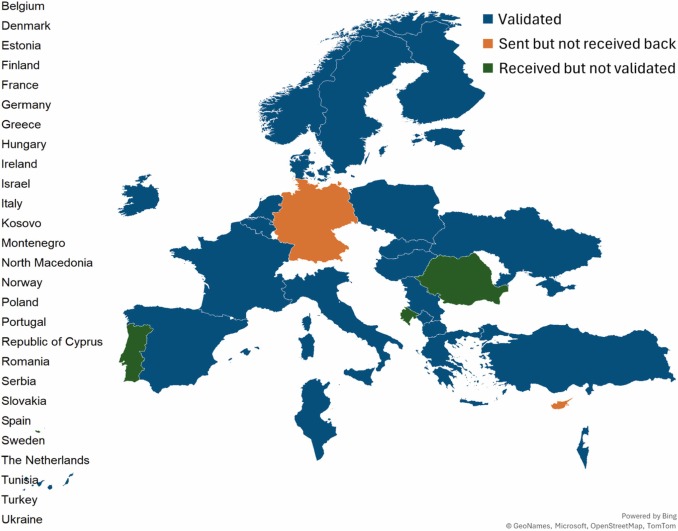
This study aimed to identify which BMs are mandated by legislation and/or other regulatory frameworks in 22 EU and non-EU countries for intensive poultry production. Using a participatory approach involving poultry experts from these 22 countries, data collection and validation were conducted through a questionnaire covering eleven biosecurity categories and comprising 56 BMs.

The survey was carried out between December 2022 and December 2023. The number of BMs mandated by legislation for all poultry species varied considerably across countries. Turkey (52), Ukraine (46), and Slovakia (38) had the highest numbers, whereas Denmark, Sweden, and Finland had none. The most regulated BMs included rodent control programs, cleaning and disinfection after each production cycle, and physical or natural farm barriers. Conversely, the least regulated BMs included farm-exclusive personnel and external silo loading, with no regulations concerning keeping other farm animals, poultry species, or pets.

Broiler and layer farming were subjected to more compulsory BMs than other poultry species. Additionally, twelve countries reported BMs under other regulatory frameworks, with Serbia (55), Turkey (53), and Poland (49) having the highest numbers, while Sweden (27), Finland (26), and Norway (25) had the lowest.

The most regulated BMs included designated clothing and footwear, hygiene locks, and clean house surroundings. The least regulated BMs were related to silo loading, manure collection, and a parking area outside the farm. There was considerable variation in the number and type of BMs mandated by legislation across countries, likely influenced by each country’s perceived disease risk. These findings highlight the importance of establishing a harmonized biosecurity framework at the European level to address regulatory heterogeneity and enhance disease prevention in poultry production.

Manual of autogenous vaccines

Manual of autogenous vaccines

  • Authors: Edited by European Manufacturers of Autogenous Vaccines & Sera (EMAV)
  • Published in: EMAV
  • Year of publication: 2023

Link to publication


The Association of European Manufacturers of Autogenous Vaccines and Sera, EMAV, has published a comprehensive Manual of Autogenous Vaccines.

This unique publication was prepared by well recognized scientists from veterinary universities in Europe, experienced veterinary experts and specialists from the circle of EMAV member companies.

The Manual covers the importance of Autogenous Vaccines (AV) for a modern vaccine portfolio and general aspects of their use including basic epidemiological aspects and a discussion of newly introduced terms like epidemiological unit and epidemiological link.

Authors discuss specific keeping, management and production conditions influencing the use of AV for food producing animal species, small animals, Zoo animals and captive wildlife extensively and present pathogen-related examples for the production and application of AV in the veterinary practice today.

Sustainable coccidiosis control implications based on susceptibility of European Eimeria field isolates to narasin + nicarbazin from farms using anticoccidial medication or coccidial vaccines

Sustainable coccidiosis control implications based on susceptibility of European Eimeria field isolates to narasin + nicarbazin from farms using anticoccidial medication or coccidial vaccines

  • Author(s): M. Glorieux, L.J. Newman, Y. -T. Wang, P. De Herdt, J. Hautekeur, Maarten De Gussem, I. Christiaens, J. Verbeke
  • Published in: Journal of Applied Poultry Research
  • Year of publication: 2022

Link to publication


Twenty-seven Eimeria spp. field isolates from 10 European countries were examined for sensitivity to the anticoccidial combination narasin + nicarbazin.

Twenty-three of the samples were collected from farms using anticoccidial medication programs, and 4 of the samples were collected from farms using coccidiosis vaccination as the exclusive coccidiosis control method. Ninety-five percent of the isolates collected from farms using in-feed anticoccidial medication demonstrated poor sensitivity to narasin + nicarbazin.

By contrast, 100% of the isolates collected from the coccidiosis vaccinated farms demonstrated good sensitivity, with a highly significant reduction in oocyst output when the isolates from the vaccinated farms were fed narasin + nicarbazin.

As sensitivity of in-feed anticoccidials declines, a combination of the use of vaccine and anticoccidial strategies may be required for sustainable coccidiosis control.

A new global postgraduate course in Poultry Health Sciences

A new global postgraduate course in Poultry Health Sciences

Official website: Postgraduate – Poultry Health Sciences


A new global postgraduate course in Poultry Health Sciences: e-learning supported with onsite practical training.

This postgraduate course was developed by the chair of Poultry Health Sciences to offer an in-depth educational program to educate fundamental and applied knowledge, to bridge the gap between research and field expertise.

Applied Research Note: Alpha-monolaurin stimulates the antibody response elicited upon infectious bronchitis vaccination of broilers

Applied Research Note: Alpha-monolaurin stimulates the antibody response elicited upon infectious bronchitis vaccination of broilers

  • Author(s): De Gussem M.
  • Co-author(s): A. Dedeurwaerder, I. Christiaens, E. P. C. W. Damen, and O. Dansen
  • Year of publication: 2021


Alpha-monolaurin has been demonstrated to have antipathogenic properties and is therefore used as feed additive for broilers to prevent infectious diseases and improve production performance.

As its antiviral effect is thought to be exerted by disintegrating the viral envelope, a-monolaurin might counteract with the current vaccination programs used in poultry production that are based on administering live attenuated viral strains. In this study, the effect of a commercially available formulation of a-monolaurin (FRAC12 Dry) on infectious bronchitis (IB) vaccination was evaluated in Ross 308 broilers.

In chickens orally vaccinated with live infectious bronchitis virus (IBV), supplementation of FRA C12 Dry did not seem to affect the uptake of vaccine IBV, though indication for enhanced viral clearance of this virus was seen after 30 d in the supplemented birds. Furthermore, anti-IBV antibody titer values were significantly higher in orally IBV-vaccinated animals receiving FRA C12 Dry compared with the control group receiving blank feed.

Taken together, the results indicate that a-monolaurin does not influence oral IB vaccination efficacy but, in contrast, has the potency to stimulate the immune response that is elicited upon vaccination.

This further supports the use of a-monolaurin as a feed additive for broilers. Follow-up studies are, however, necessary to evaluate if better protection can be established upon challenge with IBV and whether a similar effect can be observed for other pathogens.

Incidence and associated risk factors of necrotic enteritis in Belgian layer pullet flocks

Incidence and associated risk factors of necrotic enteritis in Belgian layer pullet flocks

  • Author(s): De Gussem M.
  • Co-author(s): Evy Goossens, Johan Van Erum, Tommy Van Limbergen, Chana Callens, Lieven De Zutter, Richard Ducatelle, Filip Van Immerseel
  • Published in: Avian Pathology
  • Year of publication: 2020

In this study, data from layer pullet flocks in Belgium over a 5-year period (2013–2017) were used to assess the incidence of NE and identify potential risk factors for NE in layer pullets.